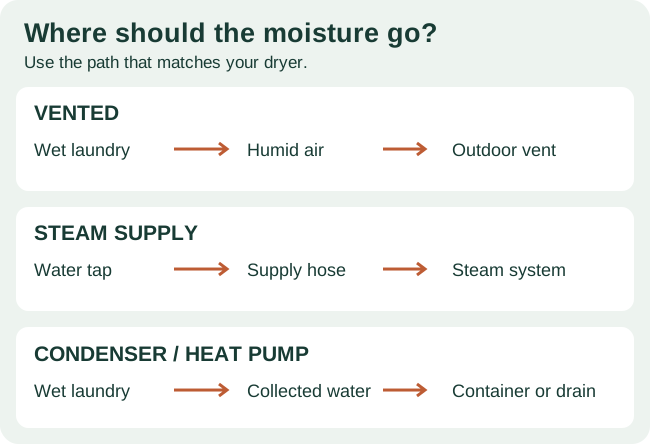
If your dryer is leaking water onto the floor, stop the cycle and leave it off while you check where the water first appears. A vented dryer can collect condensation, a steam dryer has a water supply, and a condenser or heat-pump dryer collects water in a container or sends it to a drain. Start with the connections your machine actually has.
Disconnect power before inspecting or cleaning, provided you can reach the plug from a dry position. If the plug or outlet is wet, stay away and use a safely accessible, correctly identified breaker. Close the accessible water supply to a steam dryer with an active supply leak. Leave stacked machines and gas connections in place.
Identify the wet connection
Look from an accessible position without pulling the appliance out. The large exhaust duct carries humid air away from a vented dryer. A steam model may also have a smaller water-supply hose. On a condenser dryer, a small drain hose carries collected moisture out, or a removable water container stores it.
Check nearby washer hoses and the laundry sink too. Water can run along the floor before it forms a puddle beneath the dryer. Note the first wet point you can actually see.
A steam cycle left drips at the door
On the dryers covered by Maytag’s steam guidance, a small load can finish with wet spots or condensation inside. A few drops may fall when you open the door after the cycle. Follow the load guidance in your own manual before adjusting the steam cycle.
If a hose connection is wet, inspect its visible surface and seals with the water shut off. Samsung directs owners to check the supply hose for holes or cracks and the gaskets or O-rings at both ends. Damaged parts need replacement. Contact the installer if a new installation is leaking.
Water continuing to enter the drum while steam is off needs service. Samsung distinguishes that condition from moisture left after a steam cycle. Record whether you saw the drip after the cycle ended or during a period when the dryer had not been used. Avoid starting more cycles to dry out a continuing leak.
Water is at the exhaust duct
On a vented dryer, check the accessible lint screen and look for a crushed or kinked section of duct. Restricted airflow can leave moist air inside the dryer. A cold or poorly routed duct can also collect condensation.
If water appears with long drying times, have the exhaust route checked through to its outdoor termination, including sections you cannot safely reach. Keep the dryer off until an identified obstruction is cleared. A clear short hose behind the dryer leaves the rest of the route to be assessed.
The running-but-not-heating guide covers a different symptom if there is no heat at all. Tell service whether the clothes were hot and damp or remained cold.
The idle dryer has moisture on its surface
Look at the pattern before assuming that every wet surface comes from a broken hose. Samsung explains that humid room air can leave moisture on dryer metal while the machine is idle, including the drum if its door is left ajar. Widespread droplets on exposed surfaces fit that condition more closely than a stream from one fitting.
Wipe the surfaces dry and reduce the room’s humidity. If a puddle returns, trace its source before using the dryer again. Report whether the machine had been running and whether you also found droplets on nearby cold metal.
The water container is empty, but the floor is wet
For a condenser or heat-pump dryer, first establish whether it was installed to use the container or a direct drain. Empty and refit a full container according to the manual. For direct drainage, inspect the visible hose for a kink, crush or submerged outlet.
On LG dryers covered by its Empty Water guidance, that message can also occur with direct drainage. LG says extending the drain hose can add resistance and prevent draining. If the drain is too far away, use the documented container arrangement or have the installation repositioned. Adding more hose can worsen this condition.
If this began after moving the dryer or changing from direct drainage to the container, check the connection arrangement as well as the container’s fit. LG’s drainage-conversion guide requires both routing the hose to the container connection and capping the unused lower connection on the illustrated designs. Simply removing the direct-drain hose leaves the conversion incomplete. Ask the installer to match the exact rear connector to your model’s instructions. A cap marked “Do Not Remove” elsewhere on the appliance should stay in place.
Where a Miele dryer shares a drain with a washing machine, Miele identifies a missing, misinstalled or clogged non-return valve as a route for water to flow back into the dryer. Include any timing link with the washer’s discharge in your service request. Have the drain arrangement checked against the installation instructions.
Some water remains inside an LG condenser dryer
LG describes a small amount of residual water in the lower collection area that is pumped away at the start of the next drying cycle. It also describes using condensed water to clean the condenser automatically. If you noticed a little internal water during permitted maintenance, check the manual before trying to drain the appliance or remove a cap.
Water escaping onto the floor still needs investigation. An empty container by itself is less informative than an empty container plus a recurring external leak.
What happened after the first attempt?
These owner histories show why the result of a check matters as much as the check itself.
- An LG DLHC1455 owner found the optional drain hose dry and clear, then drained the front service hose. Puddles continued from a capped area. A repair visit eventually identified a cracked drain basin, and the lower assembly was replaced.
- A NewWorld NWCGTD9HP owner cleaned the accessible heat-exchanger grille. That helped, but water still escaped from the hatch and less reached the container. Later cleaning brought reported temporary improvement, with no lasting repair established.
- A Haier heat-pump dryer owner kept the filters clean and switched from direct drainage to the drawer to observe collection. A technician then serviced the pump. The next load still took a long time and leaked. A refrigerant problem was proposed, but the report did not verify it.
- A Frigidaire dryer owner cleaned the vent yet still found water dripping in the attic duct. After discussing the route and cold-space condensation, the owner planned to contact the builder about the vent arrangement. A completed repair was not reported.
Give service the model, the drainage method, where water appeared first, and what changed after the last attempted fix. Leave internal pumps, electrical parts and heat-pump refrigerant work to a technician.